
About Rachel
Hi!
I’m so glad you’re here.
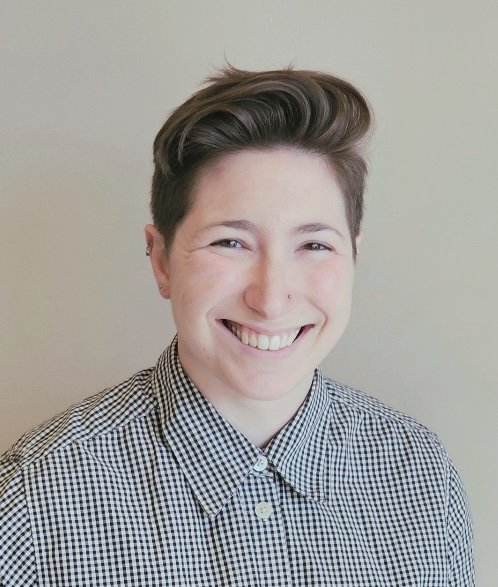
I’m Rachel (she/her), a licensed clinical social worker. I approach therapy through a social justice lens, and see people as deeply shaped by the many systems, relationships and environments in our lives.
Over the past ten years, I have worked in a wide variety of settings: community behavioral health, residential and transitional housing, as well as an eating disorder treatment center at the inpatient, residential and partial hospitalization levels of care.
I specialize in supporting children, teens and young adults as they navigate mood and anxiety disorders, identity, OCD and eating disorders. However, I recognize that healing does not take place in a vacuum, and I believe family or community engagement is a critical part of facilitating meaningful change for an individual. In addition to individual work, I often meet with the parents or caregivers of young people to promote growth and healing within the family system.
I love finding creative approaches to unique challenges, and deeply value flexibility and accessibility in therapy. One of the ways I promote this is by offering flexibility in session location: we can meet in my office, your home, the wider community or the many parks and outdoor spaces in and around Denver. Outdoor therapy has opened up a world of possibilities for both myself and my clients. I have always felt the most grounded while hiking, and I see the benefits for my clients as well. I feel so lucky to have found a seamless blend of my two passions!
Outside of sessions, I enjoy spending time outdoors, hiking, climbing and camping. I love a good road trip playlist, sharing food with friends and family, and movie nights with my exceptionally cuddly cat.
Above all, my hope is that sessions will leave you with a feeling of genuine connection.
Education & Licensure
Master of Social Work: University of Pennsylvania, 2020
Bachelor of Arts in Psychology: Hofstra University, 2016
Licensed Clinical Social Worker in the State of Colorado, License No.CSW.09928842
Specialties:
-
Whether this has been a lifelong struggle, or you’re just noticing budding body image thoughts, eating disorders are complex, painful and impossible to carry alone.
I have experience working at the inpatient, residential, PHP and outpatient level of care for eating disorder treatment, and often encourage family engagement alongside individual support.
-
As a member of the queer community, I know the value in meeting with a therapist who “gets it.” Dysphoria is a complex combination of thoughts, feelings and body sensations that are so much more than one’s appearance, and gender affirming care is the bare minimum that healthcare can provide.
Let’s explore what it means to be you in the context of your family, community and society, and find ways to access joy.
-
Obsessive Compulsive Disorder is one of the most misunderstood diagnoses- even within the field of mental health. It’s so important for OCD providers to be thoughtful in the treatment process because it’s easy to misdiagnose and mistreat.
Obsessions can be uncomfortable to talk about because they often deal with thoughts that are taboo or uncomfortable to begin with, which is why they are so distressing. You are not alone, you are not crazy, and you deserve a nonjudgmental space with someone who understands this!
-
Whether you are the loved one of someone who is self-harming or you are experiencing urges to self-harm, it’s often painful and overwhelming. Sometimes self-harm accompanies suicidality, and sometimes they exist on their own, but they are both indicators of a deeper struggle.
I am comfortable talking about suicidality in the outpatient setting, and am transparent in my recommendations if higher level of care is required. Suicidal thoughts don’t simply go away just because you’re in treatment, so if we can work on managing thoughts and urges while you’re still living at home, then we absolutely will.
-
It’s so easy to be hard on yourself when it comes to managing big emotions. I often hear clients say, “but everyone gets sad and anxious. I don’t understand why I’m affected so much.”
Yes, everyone has the capacity to experience these emotions. But nobody else has the exact same combination of physiology and life experiences as you! You deserve individualized support that speaks to your specific experience of anxiety, depression, mania, etc. because there’s no one coping skill that works the same way for every person in every situation.
-
Moved to a new city or a new school? Just went through a major breakup? Trying to navigate new family dynamics after a divorce?
Life transitions of all kinds can bring grief, anger, guilt, anxiety and other complex emotions. Whether you need short-term support during this particular transition, or long-term support through the seasons of life, we’ll make space to process your thoughts and feelings, and identify what you need to get through it.
-
As someone with extensive experience working in all levels of care, I have seen how disorienting it can be coming back into the chaos of life after discharge from inpatient, PHP or IOP. Sometimes it feels like the rug was pulled out from beneath you, and going from daily therapy to weekly therapy is not enough support. Sometimes the transition is a relief, but you have all these complicated feelings about treatment that you need to process.
Going to a higher level of care is often traumatic in itself, and I believe it is crucial to have continuing support. I offer higher session frequency if you need to start at 2-3x/weekly before easing into weekly or bi-weekly sessions.

Approach:
There is no one-size-fits-all for therapy, so we’ll work together to figure out what modalities might work best for you!
I have training and experience in the following modalities:
Acceptance and Commitment Therapy
Dialectical Behavior Therapy
Emotion Focused Family Therapy
Cognitive Behavior Therapy
Internal Family Systems
Exposure and Response Prevention
Motivational Interviewing
Family Based Treatment for Eating Disorders

Insurance Accepted
Aetna, Select Health, United Healthcare, Oscar and Oxford, and Kaiser Permanente
If you have another private insurance plan not listed above, I can provide a Superbill for possible reimbursement.
Reach out to inquire about sliding scale options.